If you use a ladder at home or on the job in Australia, you already know it can feel a bit wobbly if it is not set up properly. The reality is that even a short fall can cause serious injury, and Australian Work Health and Safety (WHS) laws expect you to manage those risks properly.
This guide walks you through simple, practical ways to maximise a ladders stability and strength while still keeping things friendly and easy to follow. We will look at what the law expects, how to choose and set up a ladder correctly, how to climb safely, and how Australian made solutions like the Lock Jaw Ladder Grip can help keep your ladder securely fixed in place.
Why Does Ladder Stability Matter So Much Under Australian WHS Laws?
In Australia, falls from height are a leading cause of serious injuries and fatalities, and ladders are involved in many of these incidents. WHS laws and the model Code of Practice on managing the risk of falls make it clear that businesses and workers must control fall risks so far as is reasonably practicable, no matter the height.
When it comes to ladders, that means:
-
Treating ladders as a last resort where safer options like platforms or scaffolds are not reasonably practicable.
-
Choosing ladders that comply with Australian Standards such as AS/NZS 1892 for portable ladders.
-
Making sure ladders are used only for light duty, short duration tasks, and always on stable surfaces.
If you are a person conducting a business or undertaking (PCBU), you have a duty to identify ladder risks, assess them, and put controls in place. That includes selecting the right ladder, securing it properly, training workers, and regularly reviewing how ladders are used on site.
Even if you are a home owner, following these principles will go a long way to avoiding a sudden slip or fall while cleaning gutters, painting, or doing repairs.
How Do Australian Standards Help You Choose A Strong And Stable Ladder?
Australian Standards for ladders, such as AS 1892.1, set out performance and geometric requirements for ladder design, materials, and load ratings. Ladders used in workplaces must meet these standards and generally should be industrial grade ladders rated to at least 120 kg safe working load.
When choosing a ladder that will stay strong and stable, ask yourself:
-
Does it comply with AS/NZS 1892 and state clearly that it is industrial grade?
-
Is the load rating suitable for the user plus tools and materials?
-
Is it the right type for the task, for example:
-
Step ladder for tasks away from a wall
-
Extension ladder for access to gutters or roofs
-
-
Are the feet non slip and in good condition?
-
Are all rungs, steps, and side rails straight and free from damage?
Portable ladders that do not meet Australian Standards or that are damaged are more likely to twist, bow, or fail when you are on them.
For heavier duty work, frequent use, or tricky access areas, pairing a compliant ladder with a secure gripping device, such as the Lock Jaw Ladder Grip device, can significantly improve stability by helping to lock the ladder firmly in place at the top.
How Can You Set Up A Ladder So It Stays Stable From The Ground Up?
Even the strongest ladder can become unstable if it is not set up correctly. Australian guidance stresses that ladders must always be placed on a flat, stable, non slippery surface.
Here are key steps to get the setup right:
-
Check the surface
-
Use firm, level ground wherever possible.
-
Avoid loose gravel, wet grass, or uneven pavers.
-
If the surface is uneven, use purpose designed ladder levelling devices or supports.
-
-
Use the correct angle for extension ladders
-
Follow the one in four rule: for every four metres of ladder height, the base should be one metre out from the wall.
-
Too steep and the ladder is more likely to tip backwards; too shallow and the base can slide out.
-
-
Secure the base
-
Ensure non slip feet sit firmly on the surface.
-
Do not place the feet on loose objects like bricks or blocks to gain extra height.
-
Keep the base clear of doorways and traffic routes, or block off the area.
-
-
Secure the top
-
The top of the ladder should be tied, clamped, or secured to the structure so it cannot slide sideways or backwards.
-
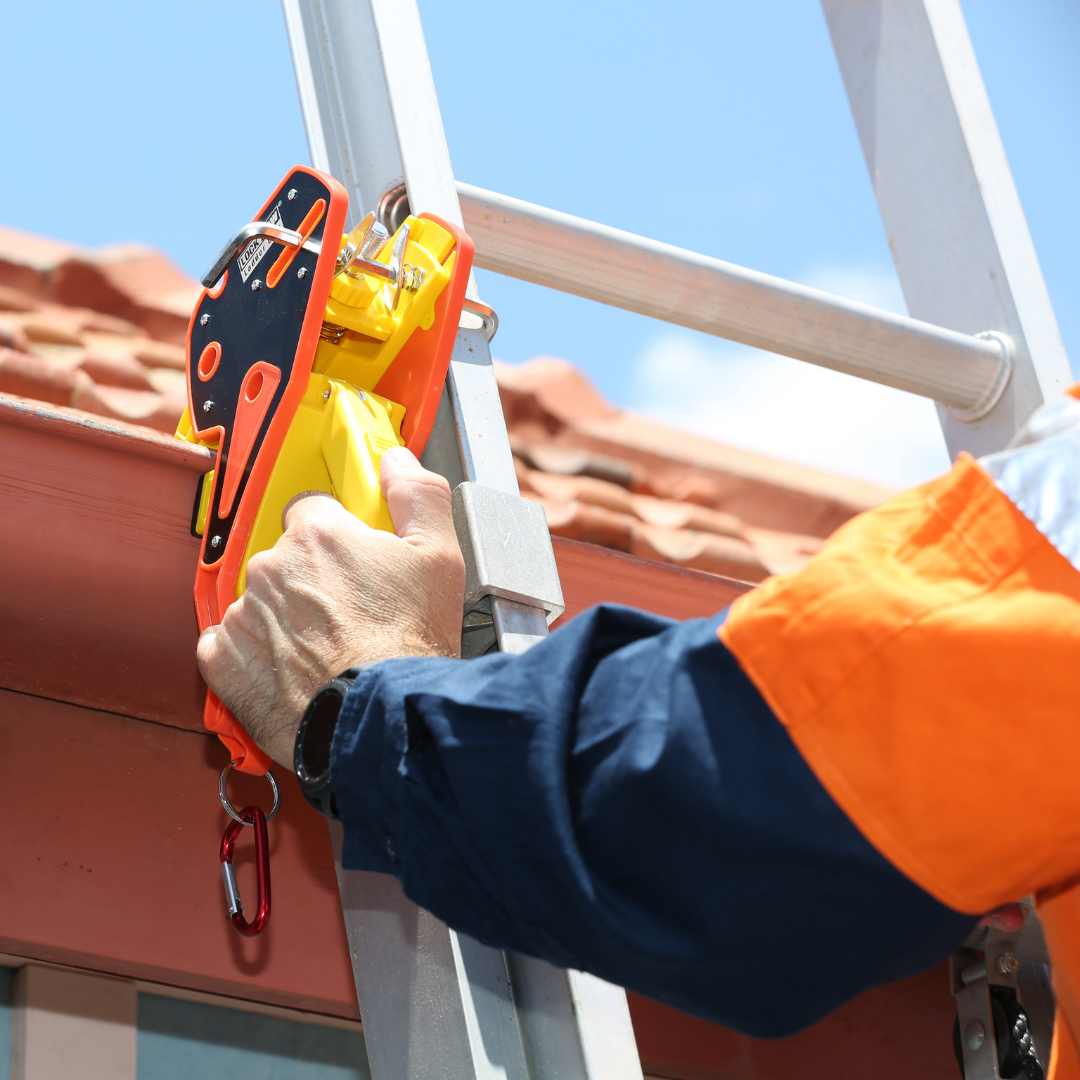
When working at gutters, a purpose built device like the Lock Jaw Ladder Grip can clamp the ladder to the gutter and help keep it locked in position, reducing the risk of sideways movement.
-
-
Maintain clear access
-
Ensure there is enough space to step safely on and off the ladder.
-
Avoid placing the ladder near power lines or overhead obstructions.
-
By treating ladder setup as a short checklist every single time, you greatly improve stability before your feet even leave the ground.
How Do Safe Climbing Techniques Help You Stay Balanced And In Control?
Once the ladder is set up, the way you climb and work on it has a massive impact on stability. SafeWork and WHS guidance consistently stresses the importance of maintaining three points of contact whenever you are climbing or descending.
To stay balanced and in control:
-
Use three points of contact
-
Keep either two feet and one hand or two hands and one foot on the ladder at all times while climbing.
-
Do not carry bulky tools in your hands; use tool belts, hoists, or pass up tools once you are in position.
-
-
Face the ladder
-
Always face the rungs while climbing or descending.
-
Avoid leaning backwards or sideways.
-
-
Stay within the side rails
-
Your belt buckle should stay between the side rails.
-
If you need to reach beyond that, climb down and reposition the ladder.
-
-
Limit time and tasks
-
Use ladders for short duration, light duty tasks only.
-
If a task requires both hands for a long period, consider whether a different access system is more suitable.
-
Good technique complements good equipment. Even with a secure top grip, poor body position or overreaching can still upset the balance of the ladder and the person on it.
How Can You Inspect And Maintain Your Ladder To Protect Its Strength?
Ladders weaken over time due to wear, weather, and knocks on site. Regular inspection and maintenance are essential for keeping their strength and making sure they remain fit for purpose. Australian fact sheets and codes of practice all highlight the need to inspect ladders before each use and to carry out more detailed periodic checks.
A simple inspection routine might include:
-
Before each use
-
Look for cracks, splits, dents, or bends in side rails.
-
Check for missing, worn, or loose rungs and steps.
-
Confirm that locking mechanisms, spreaders, and ropes operate smoothly.
-
Ensure feet and end caps are secure and non slip.
-
Wipe off mud, oil, or paint that could become slippery.
-
-
Periodic detailed checks
-
Check labels, load rating, and compliance markings are still legible.
-
Inspect fasteners and fittings for corrosion or looseness.
-
Confirm any accessories are compatible and undamaged.
-
A structured ladder inspection checklist makes this easier to repeat and document. For a practical example, you can review the ladder inspection checklist provided by Lock Jaw Ladder Grip, which walks through key checks in a simple, step by step way.
Damaged ladders should be tagged out and removed from service. Repairs should only be carried out where they will not compromise the original strength or compliance of the ladder.
What Role Do Ladder Securing Devices Play In Maximising Stability And Strength?
Australian regulators emphasise that fall prevention devices should be used wherever reasonably practicable when working at height. For ladders, that often means using stabilisers, levellers, or top securing devices to help stop unwanted movement.
Securing devices can help:
-
Prevent sideways movement at the top of the ladder.
-
Reduce the risk of the base kicking out when weight shifts.
-
Improve confidence for the user by reducing visible wobble.
When you are working around gutters or roof edges, a product like the Lock Jaw Ladder Grip can clamp the ladder firmly to the gutter. This helps to:
-
Lock the ladder in place while still allowing you to maintain three points of contact.
-
Support safer climbing in line with SafeWork ladder safety advice.
-
Provide an extra control measure to complement correct setup and good technique.
To get the most benefit, always use these devices according to the manufacturer instructions and as part of a broader WHS risk control approach, not as a substitute for good planning.
If you want more practical examples and tips on using such devices in real Australian conditions, the ladder safety resources section on the Lock Jaw Ladder Grip site is a helpful place to start.
How Can Real Ladder Fall Cases Help You Improve Your Own Safety Habits?
Sometimes the best way to understand why stability and strength matter is to look at what happens when things go wrong. Case studies of ladder falls highlight how small oversights, such as failing to secure the ladder top or overreaching from the side, can lead to life changing injuries and significant legal and financial consequences.
Lock Jaw Ladder Grip has discussed these issues in depth, including lessons drawn from high value legal cases where ladder falls led to costly claims and damages. You can read more in their article on lessons from real world ladder fall cases. While the legal details may vary between countries, the core safety lessons are highly relevant for Australian workers and home owners.
These real stories remind us that:
-
There is rarely just one cause of a fall. It is usually a combination of poor setup, rushed work, and missing controls.
-
Simple controls like securing the ladder and maintaining three points of contact could have prevented many incidents.
-
Courts and insurers look closely at whether reasonably practicable steps to control the risk were taken.
Using these lessons as a prompt to tighten your own ladder habits can make every job safer.
How Can Australian Home Owners And Tradespeople Build Safer Ladder Habits Day To Day?
Good ladder safety is not only about one big policy document or one new product. It is about everyday habits that match Australian guidance and standards.
To build safer habits:
-
Plan the task
-
Ask whether a ladder is actually the right access method.
-
Break bigger jobs into shorter, manageable tasks.
-
-
Choose and check the ladder
-
Select a ladder that complies with AS/NZS 1892 and has a suitable load rating.
-
Inspect it using a checklist like the one in the Lock Jaw Ladder Grip ladder inspection checklist.
-
-
Set up properly
-
Use level, firm ground and the correct angle.
-
Secure both the top and bottom as far as reasonably practicable.
-
Consider using a Lock Jaw Ladder Grip to help secure the ladder to gutters where appropriate.
-
-
Climb and work safely
-
Maintain three points of contact.
-
Do not overreach or overload the ladder.
-
Limit how long you stay on the ladder for each task.
-
-
Review and improve
-
After each job, think about what worked well and what felt risky.
-
Discuss improvements with your team, supervisor, or safety representative.
-
Reach out through the Lock Jaw Ladder Grip contact page if you have questions about how their products support safer ladder use.
-
Over time, these simple steps become second nature. That is when you know you are genuinely working in line with Australian WHS expectations and giving yourself the best chance of going home safe each day.
What Key Points Should You Remember To Truly Maximise A Ladders Stability And Strength?
To bring it all together, maximising a ladders stability and strength in Australia comes down to a handful of key principles:
-
Follow WHS laws and the hierarchy of control for working at height.
-
Use ladders that comply with Australian Standards such as AS/NZS 1892 and that are rated for the job.
-
Set ladders up carefully on stable ground using the correct angle and secure both the top and base as far as practicable.
-
Maintain three points of contact and keep your body between the side rails.
-
Inspect and maintain ladders regularly using a clear checklist.
-
Use purpose designed securing devices, such as the Lock Jaw Ladder Grip, to help control movement at the top of the ladder.
By combining safe equipment, good setup, solid technique, and the right accessories, you dramatically reduce your risk of falls and give your ladder the best chance to perform as it was designed.
How Can Lock Jaw Ladder Grip Help You Put These Safety Principles Into Practice?
If you want a simple, practical way to make your ladder setup more secure, Lock Jaw Ladder Grip offers Australian designed solutions that help clamp your ladder firmly to gutters and improve stability at the top. The Lock Jaw Ladder Grip device is built to support safer work at height when used alongside correct ladder selection, setup, and climbing technique.
To learn more, explore the main Lock Jaw Ladder Grip website for product details, visit their ladder safety blog and resources, or contact the team for guidance on incorporating ladder securing devices into your safety practices.
Call To Action: Where Can You Go Next To Make Your Ladder Use Safer Today?
Ready to take your ladder safety to the next level and maximise a ladders stability and strength on your next job?
Visit Lock Jaw Ladder Grip to learn more about how their ladder securing devices and safety resources can help you work more confidently and in line with Australian WHS expectations. Whether you are a home owner, tradie, or safety manager, it is a straightforward step toward safer work at height.
Works Cited
Safe Work Australia. Model Code of Practice: Managing the Risk of Falls at Workplaces. Safe Work Australia, 2020.
Safe Work Australia. "Safe Use of Ladders." Safe Work Australia, 16 Aug. 2017.
SafeWork NSW. The Pocket Guide to Ladder Safety. SafeWork NSW, 2022.
WorkSafe Victoria. "Using Portable Ladders in the Workplace." WorkSafe Victoria, www.worksafe.vic.gov.au.:contentReference[oaicite:23]{index=23}
NT WorkSafe. "Portable Ladder Safety." NT WorkSafe, 13 Oct. 2022.
Standards Australia. AS 1892.1:2018 Portable Ladders, Part 1: Performance and Geometric Requirements. Standards Australia, 2018.
Lock Jaw Ladder Grip. "Step by Step Guide: How to Safely Secure Your Ladder to Gutters." Ladder Safety Blog, 12 Nov. 2025, Lock Jaw Ladder Grip.