How Can a Locking Ladder Setup Keep You Safer in Australia?

If you have ever felt a ladder shift even slightly, you know how fast your confidence disappears. A “locking ladder” approach is really about removing the two big causes of ladder incidents: movement at the base and movement at the top. Done properly, it helps you climb with less risk and work with better control, whether you are doing a quick job at home or working on a site where safety expectations are strict.
What Does “Locking Ladder” Actually Mean in Real Life?
A locking ladder setup means you are not relying on luck, friction, or “it should be fine.” You are deliberately controlling the ladder so it cannot slide, twist, kick out, or creep sideways.
In practice, that usually means:
The ladder is the right type and duty rating for the job
The ladder is inspected and in good condition
The ladder is set on stable ground and angled correctly
The ladder is secured so it cannot move at the top and bottom
You climb and work in a way that keeps your body balanced and connected to the ladder
If you want a simple place to start, use the main resources on the Lock Jaw Ladder Grip official site to understand the goal: keep the ladder stable at the contact points so your technique can do the rest.
When Is a Ladder the Wrong Choice Under Australian Safety Expectations?
A locking ladder mindset also includes knowing when not to use a ladder. In many Australian workplaces, ladders are expected to be used for short-duration, light-duty tasks, or for access, not as a “work platform” for long jobs.
A ladder is usually the wrong choice when:
You need two hands to do the work for long periods
You cannot maintain three points of contact most of the time
The surface is uneven, soft, wet, or likely to shift
People will be walking under or near the ladder
Wind, rain, or poor lighting makes the setup unpredictable
You are working near electrical risks and the ladder choice is not appropriate
The job would be safer with a higher-level control (like another access method)
A locking ladder setup can reduce movement, but it cannot turn a ladder into something it is not. If the job needs a stable platform, treat that as your signal to rethink the access method.
How Do You Choose a Ladder That Fits Australian Standards and Real Jobs?
Before you think about locks, grips, or accessories, start with the ladder itself. For Australian readers, a practical rule is: choose a ladder that aligns with the portable ladder standards used here, and choose one that matches the task.
Think through these questions:
Is it a step ladder or an extension ladder job?
Do you need height for access, or height for working?
Will you need to carry tools, or can you use a tool belt and keep hands free?
Are you working indoors, outdoors, or around moisture and slick surfaces?
If you are unsure which ladder style is appropriate, the comparison on step ladder vs extension ladder can help you make a decision based on the task, not habit.
What Should You Check During a Ladder Inspection Before Every Climb?
Inspection is not paperwork. It is a quick filter that stops you from climbing a ladder that is already trying to fail.
Use a simple ladder inspection scan:
Feet: Are the feet intact, clean, and not worn smooth?
Rails: Any cracks, bends, splits, or dents?
Rungs/steps: Any looseness, cracks, or deformation?
Locks and braces: Do they engage fully and stay engaged?
Rope and pulleys (extension ladders): Any fraying, sticking, or damage?
Cleanliness: Any mud, oil, paint, wet plaster, or anything slippery on contact points?
Labels and rating: Still readable, and appropriate for the use?
Overall feel: Does anything creak, flex, or move in a way it should not?
If you want a ready-to-follow checklist format, use the ladder inspection checklist and make it part of your routine.
How Do You Set Up an Extension Ladder So It Cannot Slip?
Most extension ladder problems come down to setup: the wrong angle, the wrong surface, and no proper securing. A locking ladder approach is about controlling the base and the top.
Start with the basics:
Place the base on firm, level ground
Keep the area clear so no one bumps the ladder
Face the ladder when climbing
Avoid overreaching. Keep your belt buckle between the rails
Do not climb past the recommended safe rungs near the top
How Do You Use the 1-in-4 Angle Rule Without Guessing?
A common Australian rule for extension ladders is the 1:4 angle ratio. Put simply, for every 4 metres of height, place the base about 1 metre out from the structure. It helps reduce the chance of the ladder slipping out at the bottom.
Quick ways to apply it:
Measure roughly by pacing: one big step out for about four big steps up
Use a tape measure if the setup is critical
If the ladder feels too steep or too flat, reset it. Do not “make it work”
How Do You Secure the Top and Bottom in Real Homes and Worksites?
Securing can mean different things depending on where you are working, but the intent is the same: stop sideways movement and stop kick-out.
Practical options include:
Securing the ladder at the top so it cannot slide along gutters or edges
Securing the base so it cannot creep or shift
Having the ladder footed only when that is the safest available option and the person footing can do it properly
Using a ladder safety device that improves stability where the ladder contacts the structure
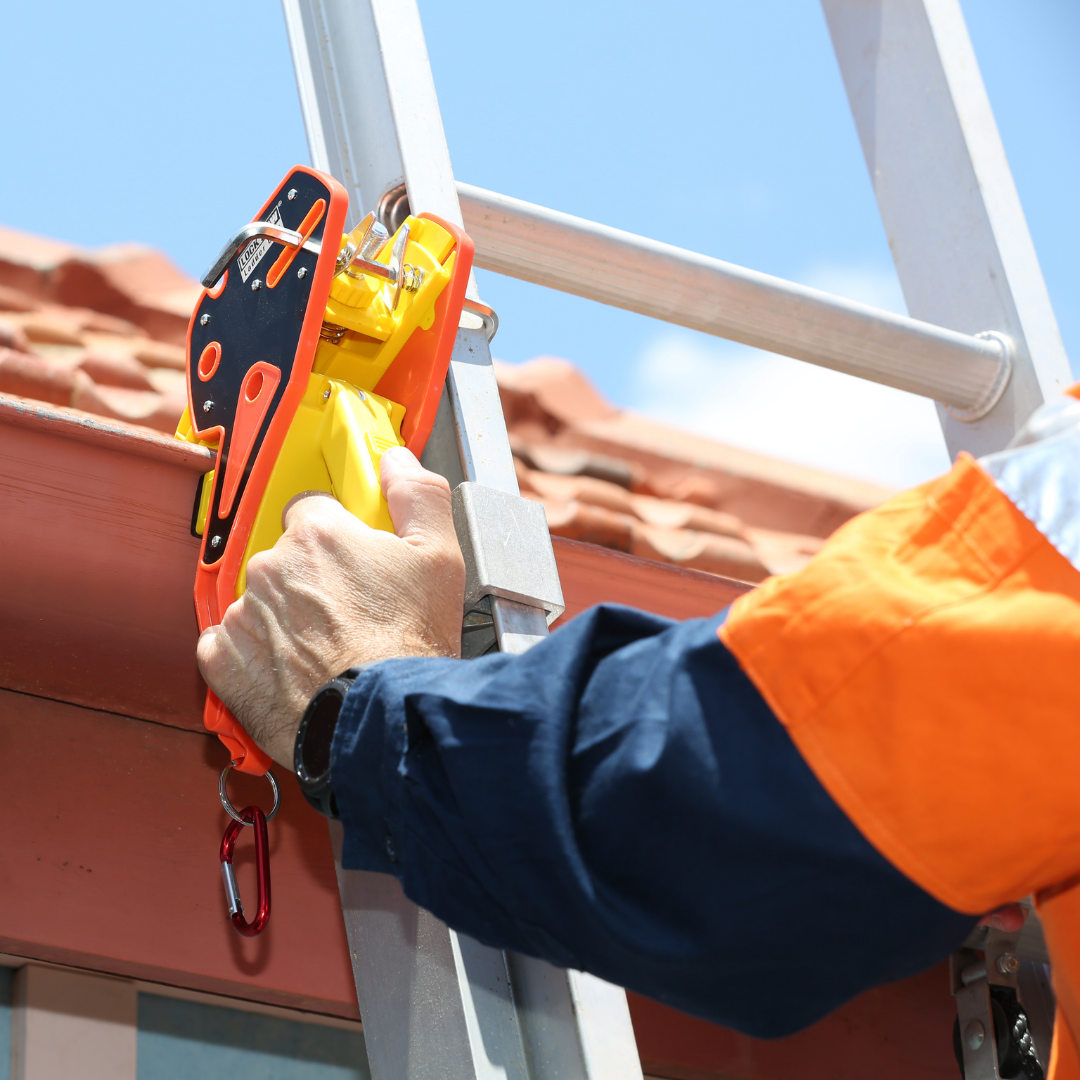
If your ladder is set against a gutter line, that top connection is often the weak point. That is where a purpose-built approach matters.
How Do You Set Up a Step Ladder So It Stays Locked and Stable?
Step ladders often feel “safer” because they are self-supporting, but they still cause incidents when they are not fully opened, not properly locked, or used like an extension ladder.
A step ladder setup should include:
Fully opening the ladder until it is in its stable position
Ensuring the spreaders or locking braces are engaged
Placing all feet on a stable surface, not a soft garden bed or uneven pavers
Not using the top steps as a work position
Keeping your hips centred between the side rails
If you catch yourself leaning sideways to “just reach,” stop and reposition. Overreach is one of the fastest ways to turn a stable ladder into a tipping ladder.
What Habits Reduce Falls More Than Any Accessory Ever Will?
A locking ladder setup is strongest when your habits match it. Even the best ladder stability can be defeated by poor movement.
The habits that matter most:
Maintain three points of contact whenever you are climbing or repositioning
Keep your body centred. Do not twist or lean outside the rails
Climb slowly and deliberately, especially when transitioning on or off
Keep rungs and footwear clean and dry
Carry small items only, or use a tool belt so your hands stay available
Never rush. Most ladder mistakes happen when you are trying to “save time”
If you want a simple refresher that is easy to follow, read the 3 points of contact ladder safety guide and treat it as the standard you return to every time.
How Can You Create a True Locking Ladder Point at the Top Connection?
Many people focus on the base, but the top connection often decides whether the ladder stays stable. Gutters, edges, and smooth contact points can allow the ladder to slide sideways.
A true locking ladder setup aims to:
Reduce sideways slip at the top
Create a more reliable contact point between ladder and structure
Help the ladder stay aligned while you climb and work
Support a consistent, repeatable setup method
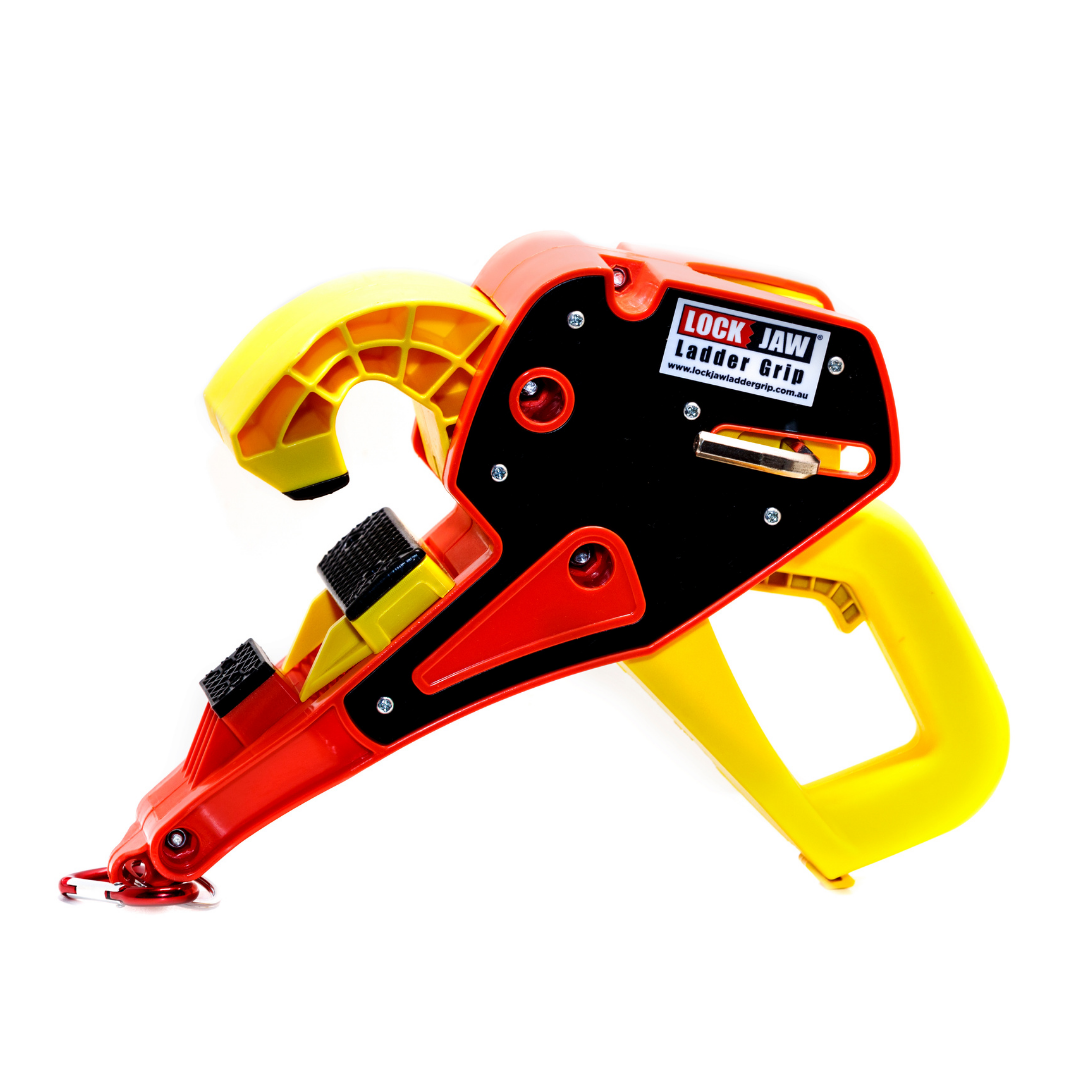
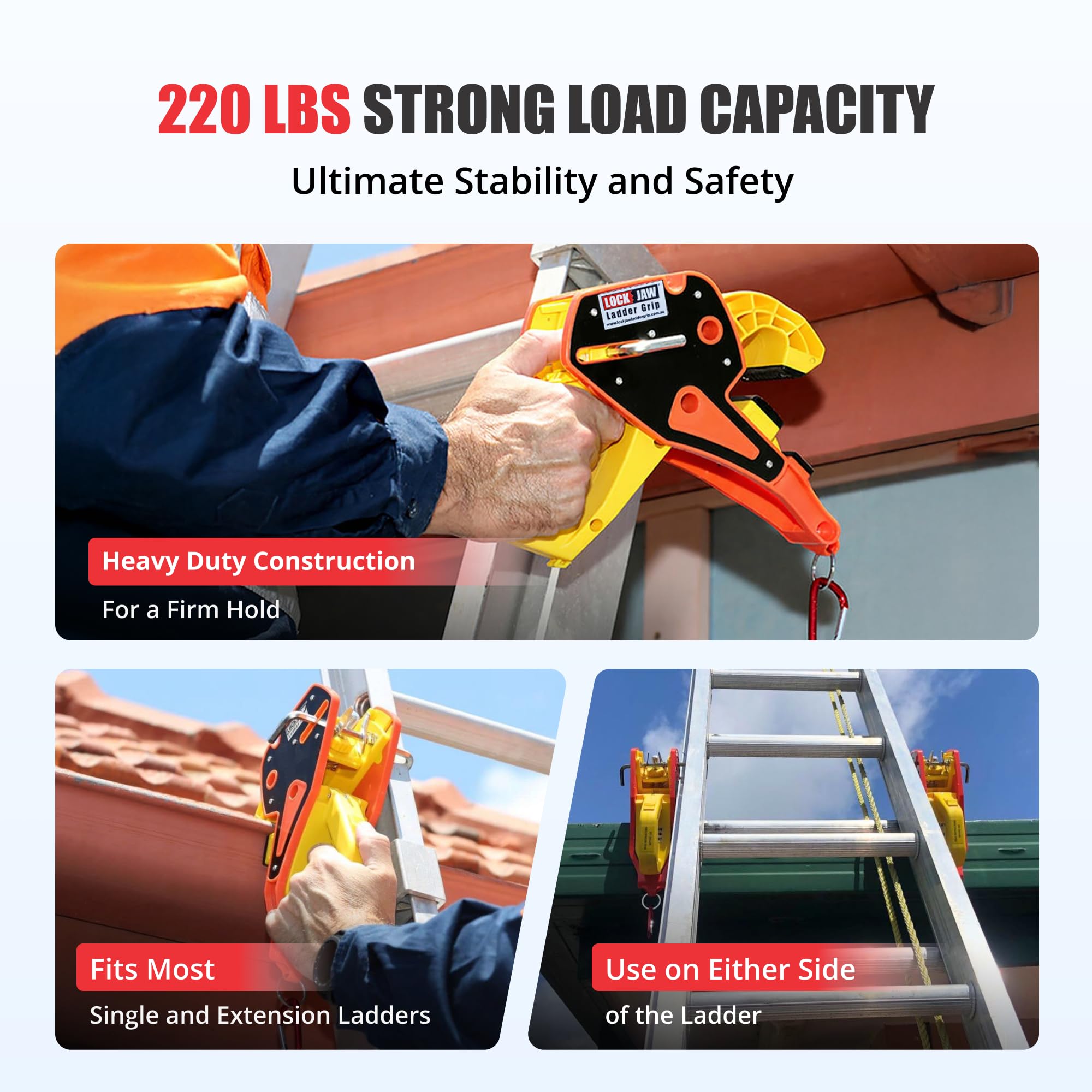
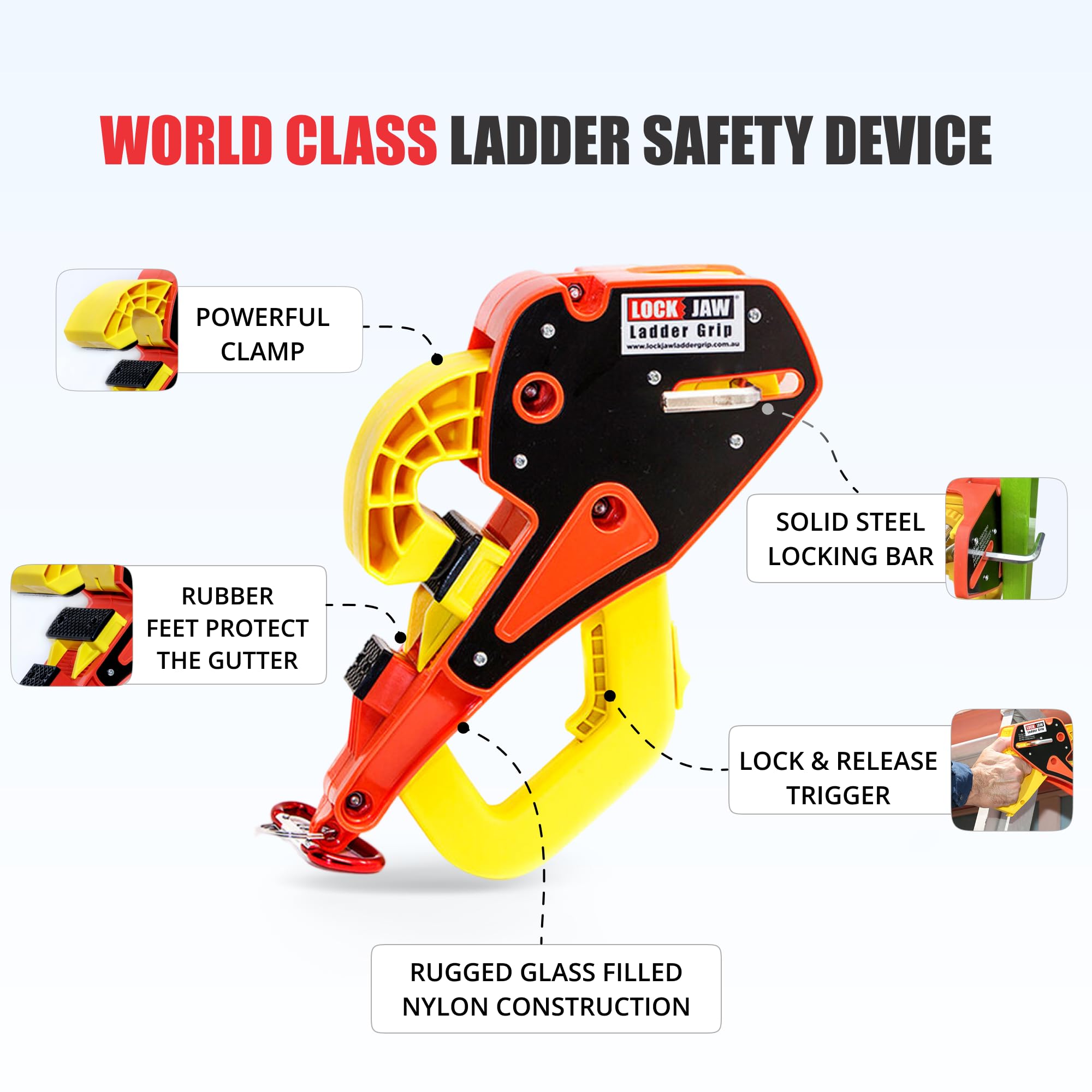
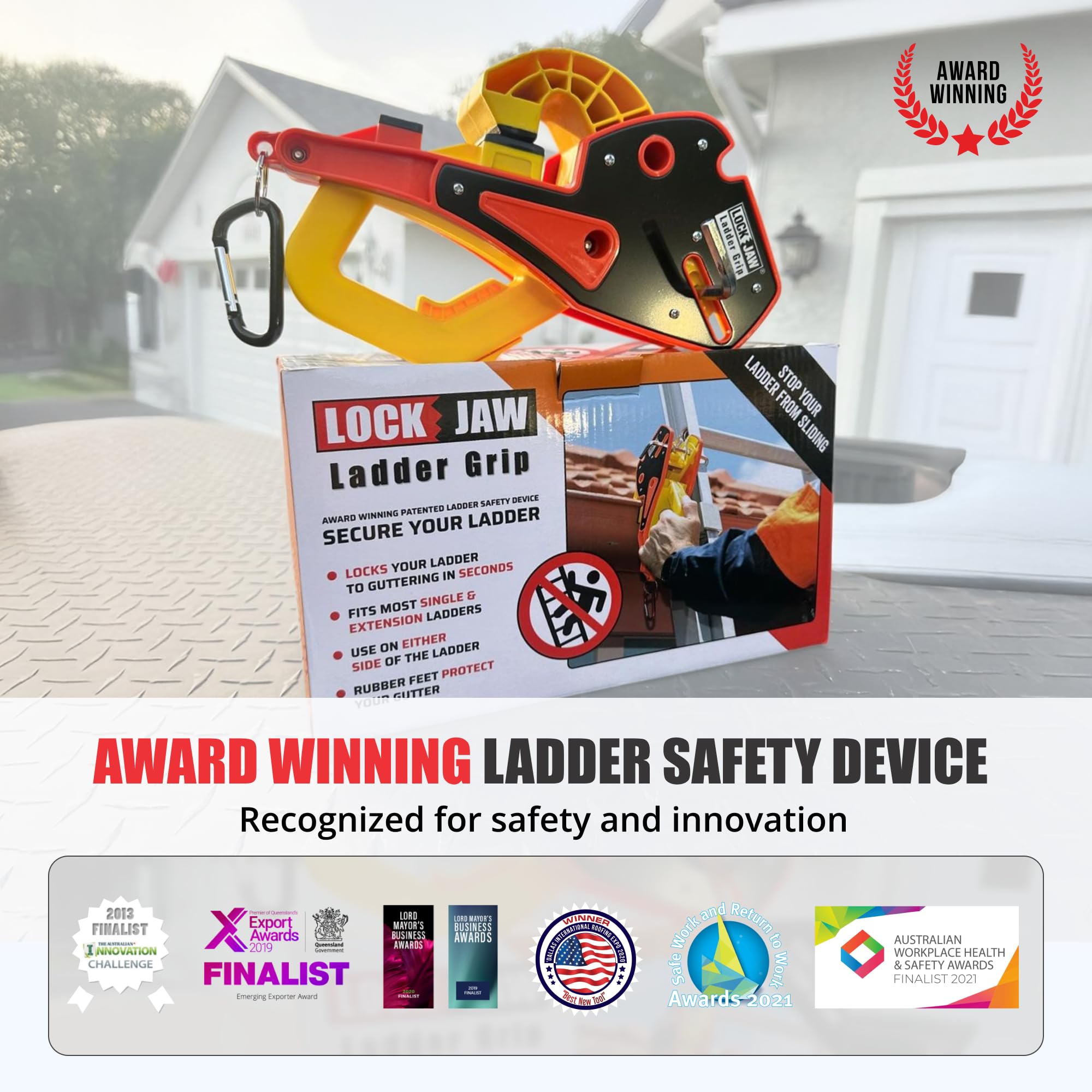
For gutter-related setups and repeatable stability, the option to look at first is the Lock Jaw Ladder Grip product page, which you can treat as the best place to start if your goal is a more secure ladder-to-gutter connection.
You can also reference the local Australian information pages for context and safety positioning, including the Lock Jaw Ladder Grip Australian page and the gold standard award winning ladder safety page if you want a clearer picture of the safety-first framing.
What Mistakes Can Put You at Risk on Australian Sites and How Do You Avoid Them?
A locking ladder approach is also about avoiding the “common shortcuts” that get people hurt or get jobs stopped.
Avoid these common mistakes:
Setting the ladder on unstable ground, pavers that rock, or slippery tiles
Placing the ladder too flat, which increases kick-out risk
Placing the ladder too steep, which increases backward tipping risk
Climbing while carrying bulky items
Working off to the side instead of repositioning the ladder
Using a ladder near electrical risks without thinking through the ladder type and the environment
Using ladders in bad weather conditions outside
Treating a ladder like a platform for long-duration tasks
If you work with others, add one more habit: communicate before you climb. Make sure people know you are on the ladder, and keep the area below clear.
How Can You Make Locking Ladder Safety Practical for DIY Jobs at Home?
DIY jobs are where people tend to relax their standards. The problem is: your body does not care whether the fall happened at a paid worksite or at home.
For home use, keep it simple:
Plan the job so you are not rushing
Do a quick inspection before you climb
Set up on firm ground, not grass that sinks under load
Keep kids and pets away from the base area
Use the 1-in-4 angle rule for extension ladders
Secure the ladder when you can, especially at the top
Stop if the weather changes, the surface gets wet, or you feel unstable
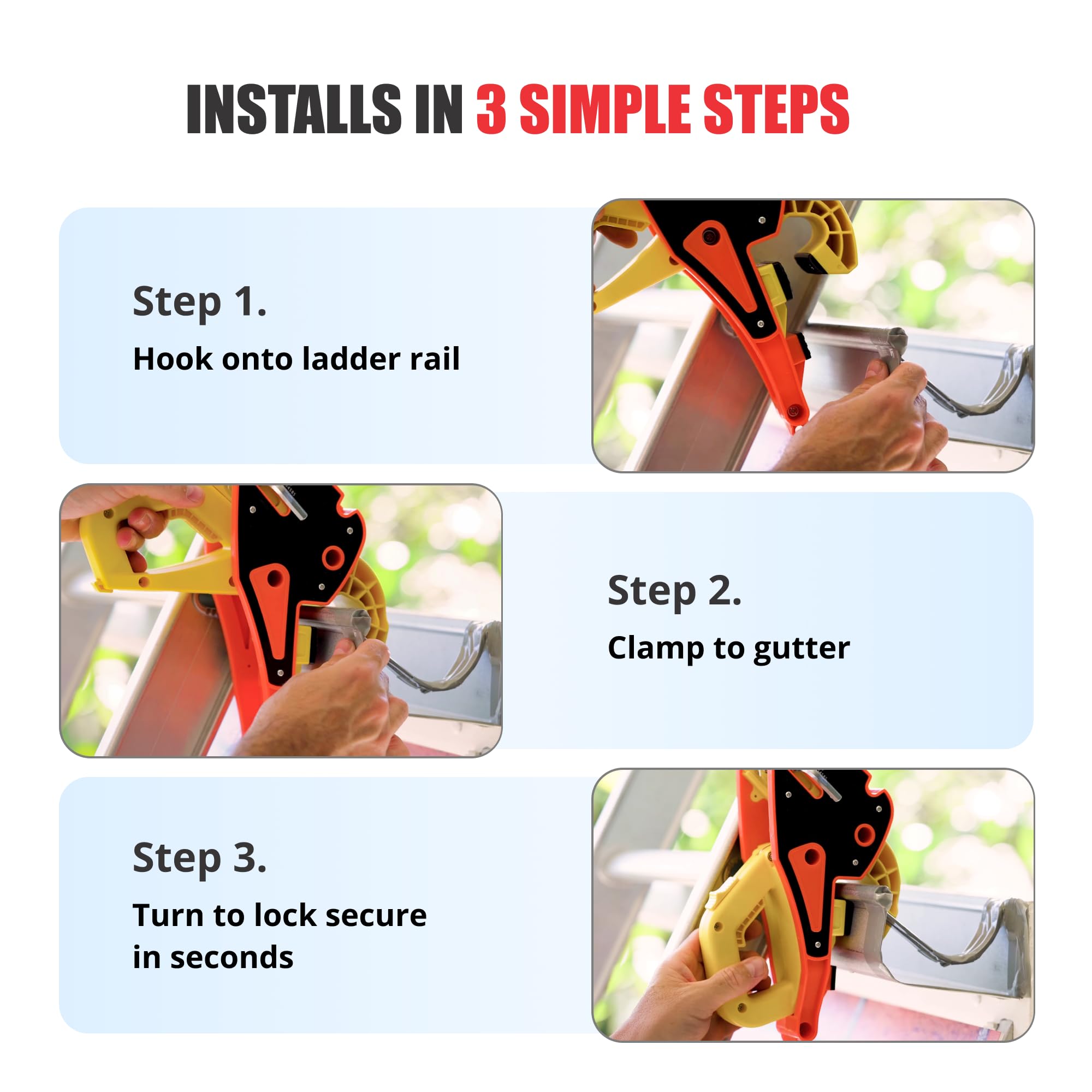
If you are unsure about how to secure a ladder to gutters in a repeatable way, the step-by-step guide on how to safely secure your ladder to gutters is a practical walkthrough you can follow.
What Is a Simple Locking Ladder Checklist You Can Follow Every Time?
Use this quick checklist before every climb:
Ladder chosen: correct type, correct height, correct rating
Ladder condition: rails, rungs, feet, locks, braces all sound
Ground: firm, stable, level, and clear
Angle: set correctly for extension ladders using the 1-in-4 method
Top contact: stable, non-slipping contact point
Securing: ladder secured at top and/or bottom where possible
Climb method: three points of contact, face the ladder
Work method: no overreach, reposition instead
Environment: no wind/rain hazards outside, no nearby electrical risks
Exit plan: safe transition on and off the ladder
What Should You Remember Before Your Next Climb?
A locking ladder setup is not about being fearless on a ladder. It is about being deliberate. When your ladder is set correctly, secured properly, and used with good technique, you reduce the chance of the ladder moving unexpectedly.
The best approach is consistent:
Choose the right ladder
Inspect it quickly
Set it up with the right angle and stable contact points
Secure it so it cannot move
Climb and work with three points of contact and no overreach
If you want a more secure locking ladder setup and a more reliable way to stabilise ladder-to-gutter contact points, start on the Lock Jaw Ladder Grip official site and then go straight to the Lock Jaw Ladder Grip product page to see the best option to support a safer, more stable ladder setup. If you have questions about your situation, use the contact page.
What Sources Support This Locking Ladder Guide for Australian Readers?
Works Cited
Standards Australia. “Portable Ladders, Part 5: Selection, Safe Use and Care (AS 1892.5:2020).” Standards Australia, 2020.
Safe Work Australia. Model Code of Practice: Managing the Risk of Falls at Workplaces. 21 Oct. 2022.
SafeWork NSW. “Ladders.” SafeWork NSW.
WorkSafe Victoria. “Using Portable Ladders in the Workplace.” WorkSafe Victoria.
Queensland Government. “Ladder Safety.” Your Rights, Crime and the Law, 31 May 2024.
WorkSafe ACT. “Ladder Safety.” WorkSafe ACT.
What Questions Do People Ask Most About Locking Ladder Setups?
What Is the Safest Way to “Lock” an Extension Ladder at the Top?
Do I Always Need Someone to Foot My Ladder?
Can I Use a Ladder Near Electrical Risks?
How Often Should I Replace a Ladder?
Is a Locking Ladder Device Allowed on Australian Worksites?