Ladder safety for solar installers begins before anyone climbs. Choosing suitable access equipment, securing the ladder and planning roof access all deserve attention. A near fall is a reminder to review those arrangements, even when the task feels familiar.
In our video, How to prevent falls when working at heights (Ladder Safety), we speak with Tyler, founder of Buffalo Solar. The interview covers fall prevention and a staff member’s experience of nearly falling from a ladder during a solar installation. It brings a practical workplace experience into a conversation about keeping teams safe.

Buffalo Solar interview thumbnail. Source: Lock Jaw Ladder Grip on YouTube.
Watch the Buffalo Solar ladder safety interview
A Near Fall Is a Reason to Review the Job
The experience described in the video highlights why ladder safety matters to solar installation teams. Roof access can become routine, but familiarity should never replace a careful check of the equipment and the site.
A useful response to a near miss is to review what happened with the people involved. Consider the access route, equipment condition, ladder positioning and the steps needed to move between the ladder and roof. The aim is to identify what needs to change before the next job.
Safer Roof Access Starts with Planning

Roof access beside solar panels. Image: Lock Jaw Ladder Grip official website.
Solar installation involves more than the climb. Workers may face roof edges, fragile surfaces and openings as well as ladder hazards. Safe Work Australia’s rooftop solar installation guide addresses these risks as part of planning the work.
Start by considering whether tasks can be completed from the ground and what access equipment suits the site. Scaffolding or an elevating work platform may be appropriate alternatives to a ladder. Plan protection for work on the roof as well as entry and exit.
Australian installation teams can consult the Safe Work Australia rooftop solar installation guide when preparing their work arrangements.
Safety Leadership Makes the Conversation Matter
Tyler’s participation in the interview brings a business leader’s perspective to ladder safety. For supervisors and business owners, the subject also presents an opportunity to invite workers to raise concerns about roof access and equipment.
Use the video as a starting point for a toolbox discussion. Ask the team what they check before climbing, how they secure access equipment and what would cause them to stop and reassess the job. Turn the answers into clear actions for the next site.
Practical Ladder Safety Checks for Solar Teams
SafeWork SA’s solar installation guidance outlines several measures for safer access. When a ladder is the appropriate choice, these checks belong in the site’s wider safety plan:
- Position it correctly. Use the 1:4 setup ratio for a leaning ladder and suitable ground conditions.
- Secure it against movement. The guidance calls for securing the ladder at both the top and bottom.
- Provide safe roof access. Extend the ladder at least one metre above the roof edge.
- Maintain three points of contact. Plan the climb and descent so workers can keep contact with the ladder.
- Protect workers on the roof. Assess edge protection, work platforms, openings and fragile surfaces separately.
Read SafeWork SA’s guidance for solar panel installations for the full context and hierarchy of controls.
Where Lock Jaw Ladder Grip Fits


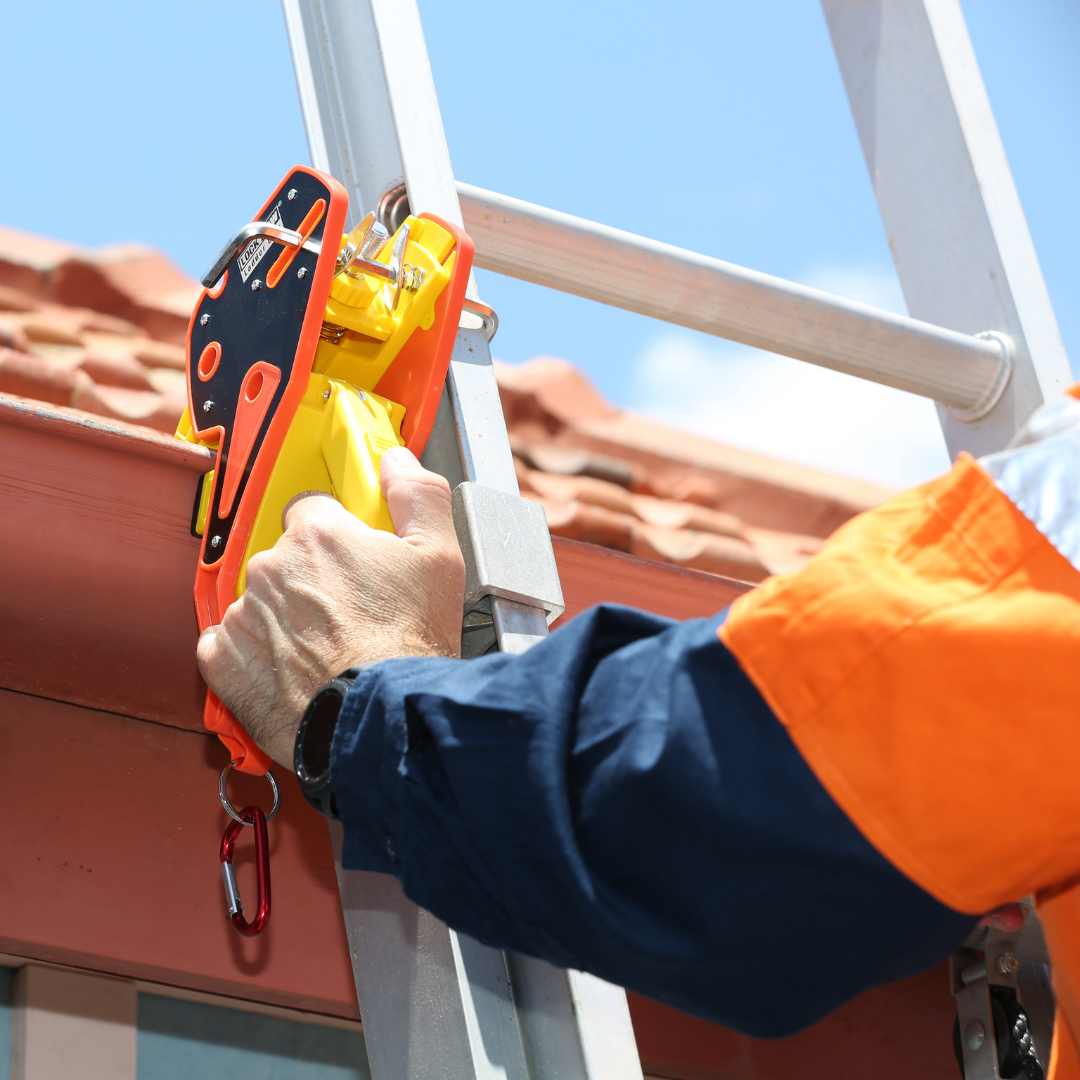
Lock Jaw Ladder Grip and a gutter connection example. Images: Lock Jaw Ladder Grip official website.
Lock Jaw Ladder Grip is a ladder accessory that clamps to suitable guttering and secures against the ladder rail. It can help address movement at this connection when correctly fitted to a compatible ladder and gutter.
Check suitability before use. Our instructions require sound guttering and a secure fit against the ladder rail. The device is not intended for plastic gutters, and it must not be used if damaged or if the gutter’s structural integrity is in doubt.
A ladder grip forms one part of the setup. Roof edge protection, safe footing, appropriate access equipment and the normal procedures for using a ladder still need to be addressed. It is not a fall-arrest device and does not protect a worker who falls from a roof.
Read our Instructions for Use before fitting Lock Jaw Ladder Grip.
Watch the Interview and Review Your Roof Access
The Buffalo Solar interview is a useful prompt to discuss ladder safety with your team. Use the near-fall experience described in the video to open a conversation about the access arrangements on your own sites and the checks that deserve more attention.
Watch the full interview with Tyler from Buffalo Solar, then explore Lock Jaw Ladder Grip and check whether it suits your ladder and gutter setup.
Sources
Original video and publisher description
Safe Work Australia rooftop solar installation guide