If you have ever felt a ladder “shift” slightly under you, you already understand why ladder stability matters. Most ladder incidents are not caused by one dramatic mistake. They happen because a few small things stack up: a slightly slippery surface, a rushed setup, uneven ground, the ladder not being secured, or you reaching just a bit too far.
A ladder stability device is one practical way to reduce those common risks. It is not a magic fix, and it does not replace proper ladder selection, inspection, setup, or training. But used correctly, it can add stability where ladders usually fail: at the base, at the top contact points, or during entry and exit.
This guide is written for Australian readers, using plain language and the sort of safety expectations you will see across WHS guidance and Australian workplace practices.
Why Does Ladder Stability Matter So Much in Australia?
Ladders are everywhere in Australia: homes, warehouses, job sites, farms, and commercial maintenance. Because they are common, people often underestimate them.
Here is the hard truth: even “low” heights can seriously injure you. And as the height goes up, so does the risk. That is why good practice in Australia focuses on planning and control measures, not just confidence and experience.
A simple way to think about it is this:
A ladder is not a work platform, it is temporary access equipment
If the task is complex, heavy, awkward, or long-duration, a ladder is usually not the safest option
If a ladder must be used, stability becomes the first priority, because a stable ladder supports everything else you do correctly
What Is a Ladder Stability Device in Plain English?
A ladder stability device is any accessory or attachment designed to help prevent the ladder from slipping, shifting, or twisting during use. Different devices solve different problems, so it helps to know what “stability” means in real life.
Common types of ladder stability devices include:
Base grips or anti-slip devices that help reduce bottom slip on smooth surfaces
Stabilisers or spreaders that increase the ladder’s contact footprint
Stand-off brackets that help keep the ladder from leaning sideways and give a steadier top contact
Top straps, hooks, or tie-off solutions that help stop movement at the top
Levelling aids designed to help deal with slight ground variation (where permitted and used correctly)
A good ladder stability device supports correct setup. It should never encourage risky behaviour like overreaching, standing too high, or using the wrong ladder for access.
When Should You Consider Using a Ladder Stability Device?
If you are asking “Do I need one?”, a better question is “What could make this ladder move?”
Consider using a ladder stability device when you have one or more of these conditions:
The surface is smooth (tiles, sealed concrete, polished floors, compacted surfaces)
The surface is slightly dusty, damp, or likely to get wet during the task
You cannot properly secure the ladder top and bottom without help
You need steadier entry and exit at the top point
The task involves repeated climbs, which increases fatigue and small mistakes
There is any sideways pressure risk (reaching, drilling, pulling, pushing, handling tools)
It is also worth thinking about stability if you are working alone. Many ladder controls are easier with a second person. A ladder stability device can help, but it should not replace the basics.
What Does Good Australian-Style Ladder Setup Usually Require Before You Climb?
Australian WHS expectations are built around risk management: identify the hazard, assess the risk, then control it using the highest practical level of protection.
Before you climb, think through these essentials.
What Should You Check First on the Ground and Surroundings?
Start with what the ladder will sit on and what is around you:
Is the ground firm, stable, and as level as possible?
Is there a slip hazard (dust, water, oil, loose gravel, grass, mud)?
Is there a risk of the ladder being knocked (doors, walkways, vehicles, pets, children)?
Is there overhead risk (powerlines, branches, ceiling hazards)?
Is the weather turning bad (wind gusts matter more than people expect)?
If you cannot control these risks, pause and change the plan.
What Ladder Angle and Positioning Should You Aim For?
A widely used rule for extension ladders is the 1 in 4 setup (often described as about a 75-degree angle). Put simply: for every four metres of height up to the support point, the base is about one metre out. This helps reduce the chance of the ladder slipping or kicking out.
Other positioning basics that matter just as much:
Make sure the ladder feet are planted evenly and not twisted
Make sure the ladder is not set up on unstable items like boxes, bricks, loose timber, or stacked materials
Avoid setting up on soft ground that can shift under load
Where practical, secure the ladder so it cannot move at the top, bottom, or both
A ladder stability device can support this, but it cannot correct a badly chosen location.
How Can You Maintain Three Points of Contact Without Overthinking It?
Three points of contact means that at any moment you have either:
Two hands and one foot on the ladder, or
Two feet and one hand on the ladder
That is why carrying large items while climbing is so dangerous. If the item prevents you from keeping contact, change the approach:
Use a tool belt
Use a hoist line for tools and small gear
Make multiple trips instead of one heavy trip
Set up the job so the ladder is for access, not constant work positioning
If you want a simple refresher you can share with a crew, this three points of contact ladder safety guide is a solid reference.
How Are Step Ladders and Extension Ladders Different for Stability?
Step ladders and extension ladders fail in different ways, so your stability thinking should change too.
With a step ladder, the common stability risks are:
Not fully opening and locking the ladder
Standing too high (near the top steps)
Leaning out to the side
Using it as a bridge or plank (do not do this)
Setting it up on uneven ground so one foot floats
With an extension ladder, the common risks are:
Incorrect angle or base position
Bottom slip or kick-out
Top slip if the contact point is unstable
Side twist when the user reaches or pushes sideways
Not extending far enough for safe entry and exit at the top
If you want a clear comparison you can use to choose the right ladder for the job, see this step ladder vs extension ladder breakdown.
What Should You Look For When Choosing a Ladder Stability Device?
A ladder stability device is only useful if it fits your ladder, suits the task, and supports safe behaviour.
When comparing options, look for:
Compatibility with your ladder type and ladder feet design
A design that improves grip without damaging surfaces unnecessarily
A setup method that is simple enough you will actually use it every time
Durability for Australian conditions (dust, UV, moisture, worksite handling)
Instructions that support correct setup and do not encourage shortcuts
A stability benefit that matches your main risk (base slip, top shift, sideways twist, entry and exit)
If your main issue is bottom slip or base movement, focus your selection there first. The ladder base is where small movement becomes big danger.
How Do You Use a Ladder Stability Device as Part of a Safe Routine?
The safest way to use a ladder stability device is to build it into the same routine every time, so you do not rely on memory when you are tired or rushed.
Here is a practical routine you can follow.
What Is a Simple Setup Checklist You Can Use Every Time?
Check the work area for ground stability, hazards, and traffic
Inspect the ladder before use (rails, rungs, feet, locks, extension hardware)
Fit your ladder stability device according to its instructions
Position the ladder using correct angle and stable contact points
Secure the ladder where practical (top, bottom, or both)
Do a quick “shake test” from the ground: the ladder should feel planted, not loose
Climb facing the ladder, keep three points of contact, and avoid carrying bulky items
If you feel movement, stop and reset rather than “pushing through”
If you want a structured process for ongoing checks, keep this ladder inspection checklist handy and treat it like a pre-start.
How Do You Keep Your Ladder and Stability Device in Good Condition?
Stability is not just about buying an accessory. It is also about keeping your gear in working order.
Good habits include:
Clean ladder feet regularly so dust and grime do not reduce friction
Store ladders out of harsh weather where possible
Check for loose components, cracks, bent rails, worn feet, and damaged locks
Replace worn parts rather than “making it work”
Treat stability devices the same way: check for wear, deformation, and grip surface condition
Remove damaged equipment from service immediately
If you manage ladders for a team, consider a simple logbook approach where ladders are tagged and checked on a schedule, not just when someone remembers.
What Makes the Lock Jaw Ladder Grip a Practical Ladder Stability Device?
Many stability products are bulky, slow to install, or easy to forget. The most useful ladder stability device is the one you will actually use consistently.
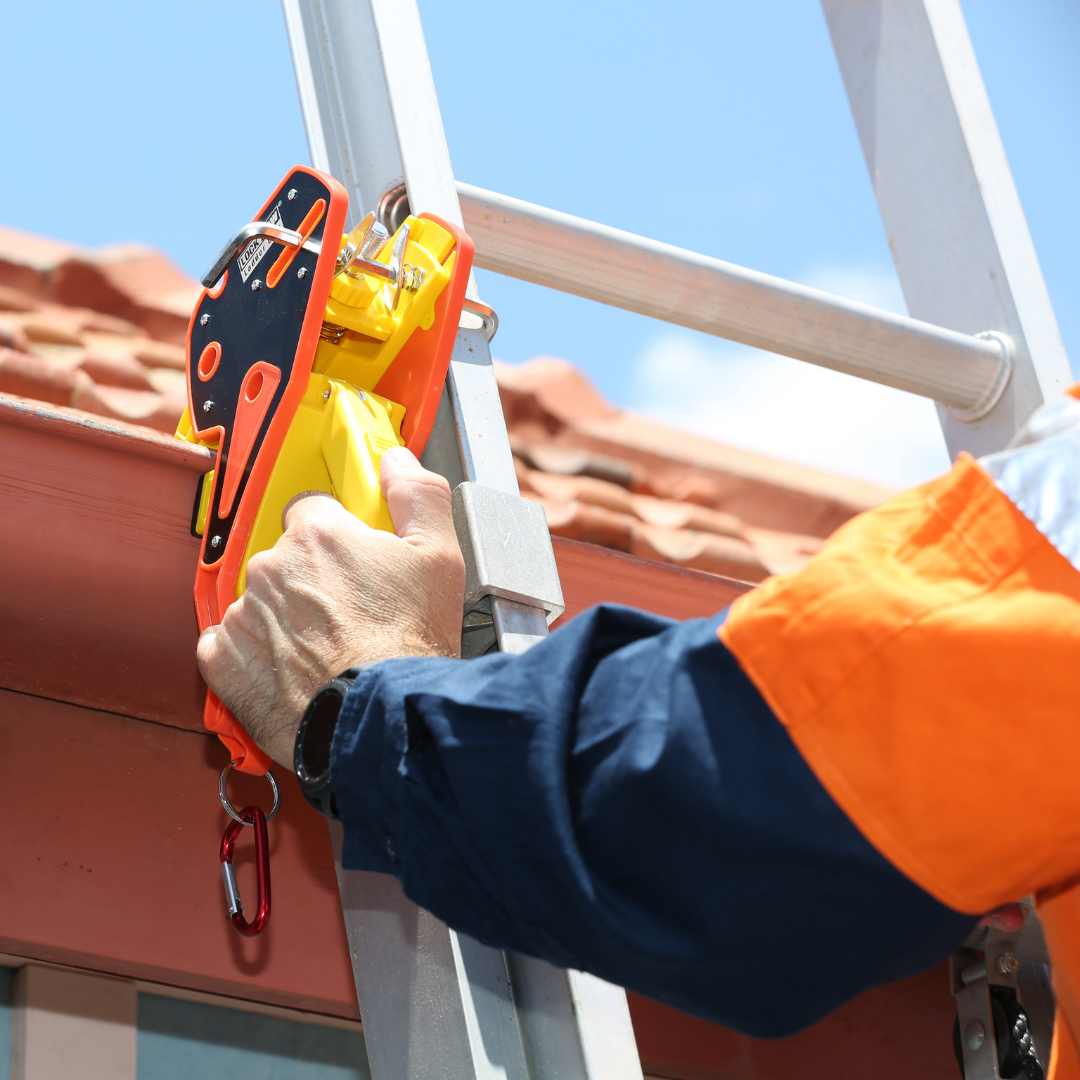
The Lock Jaw Ladder Grip stands out because it is designed to help stabilise the ladder at the base, which is one of the most common points where slip begins. It is also simple enough to fit into a normal setup routine, so it supports consistency, not just good intentions.
If you want a deeper explanation of how it fits into everyday ladder use, you can also read the Lock Jaw Ladder Grip overview and the Gold Standard award-winning ladder safety page.
And if you need help choosing the right option for your ladder type or typical jobs, you can contact Lock Jaw Ladder Grip here.
What Ladder Mistakes Can a Ladder Stability Device Help Reduce?
A ladder stability device cannot fix everything, but it can help reduce the likelihood of common mistakes becoming incidents.
It may help reduce risk when people accidentally:
Set the ladder on a slightly slippery surface and assume it will hold
Underestimate small shifts at the base that get worse during the climb
Forget to secure the ladder properly because the task is “quick”
Apply sideways force by reaching, drilling, or pulling
Get complacent after repeated climbs
The best results happen when the device supports safe choices, not when it is used as an excuse to work faster or take bigger risks.
What Should You Do If the Job Still Feels Risky Even With a Stability Device?
If the job still feels unsafe after you plan it properly, that is a sign to change the method.
Options may include:
Using a safer access system designed for working at height
Changing the task sequence so work is done from the ground where possible
Getting a second person to help control the ladder and manage tools
Delaying the job if weather or site conditions are poor
Ensuring you have the right training and supervision for the task
In Australian workplace practice, “reasonably practicable” controls matter. If the risk is high, the control should be stronger than “a ladder plus hope.”
What Is the Safest Way to Use a Ladder Stability Device on Real Jobs?
A ladder stability device is best viewed as one strong layer in a bigger safety system.
The safest approach is:
Choose the right access method first
Inspect the ladder and the device every time
Set the ladder at the right angle on stable ground
Secure the ladder where practical
Use the ladder for short-duration, simple tasks
Keep three points of contact
Stop and reset if anything feels unstable
Do that consistently, and you dramatically reduce the “small slips” and “near misses” that lead to serious falls.
If you want a ladder stability device that is designed to help improve base stability and fits easily into a real-world setup routine, start with the Lock Jaw Ladder Grip, and explore more ladder safety resources at Lock Jaw Ladder Grip.
What Sources Support the Australian Ladder Safety Expectations Mentioned Above?
Works Cited
Safe Work Australia. “Safe Use of Ladders.” Video and audio resource, 16 Aug. 2017. Accessed 6 Feb. 2026.
Safe Work Australia. “Working at Heights.” Safety topic page. Accessed 6 Feb. 2026.
SafeWork NSW. “Ladders.” Hazard guidance page. Accessed 6 Feb. 2026.
WorkSafe Victoria. “Using Portable Ladders in the Workplace.” Guidance page. Accessed 6 Feb. 2026.
WorkSafe Queensland. Managing the Risk of Falls at Workplaces: Code of Practice 2021. Approved code of practice (PDF). Accessed 6 Feb. 2026.
Standards Australia. “AS 1892.5:2020: Portable Ladders, Part 5: Selection, Safe Use and Care.” Standards catalogue entry. Accessed 6 Feb. 2026.